Do Anti-Fog Mirrors Work in Steamy Bathrooms After a Shower?
Yes—an anti-fog mirror can stay clearer after a shower, but how well it works depends on the type of mirror, how it is installed and how much steam the bathroom holds. For a landlord or property manager, the practical question is not just whether the glass clears. It is whether the mirror makes the bathroom easier to use, especially when several people need it in quick succession.
A heated mirror pad is a common way to provide an anti-fog function. It warms the mirror surface slightly, helping prevent condensation from settling on the glass. That can make a noticeable difference in a small or shared bathroom. It will not, however, fix poor ventilation, instantly clear every mirror edge or compensate for a fan that is not working properly.
This guide explains what to expect, how to choose a suitable mirror and when the upgrade makes more sense than a full bathroom renovation. It also covers measuring and marking the mirror position so the fitting can be planned without turning a straightforward refresh into a bigger job.
How does the anti-fog function work?
After a hot shower, warm, moist air meets cooler surfaces. The moisture condenses into tiny droplets on the mirror, making it look misty. An anti-fog mirror uses a heating element—often a heated mirror pad attached behind the glass—to keep the mirror surface a little warmer than the surrounding air. With less temperature difference, condensation is less likely to form on the treated area.
Some mirrors have the heating element built in; others use a separate pad. In either case, the anti-fog function usually covers a defined section rather than the entire mirror. The warmed area should be checked against the mirror’s dimensions and the spot where people actually need to see themselves.
What an anti-fog mirror can and can’t do
- It can: reduce misting on the heated section, making it easier to shave, apply make-up or get ready after a shower.
- It may: take a short time to warm up, depending on the product and how it is switched on.
- It may not: keep every edge clear if the heated area is smaller than the glass.
- It cannot: remove excess moisture from the room or replace effective bathroom ventilation.
So, does the mirror work “after a shower”? In many cases, yes, but results vary. A mirror that is switched on before or during a shower may be clearer when the user steps out. A mirror switched on only afterwards may need time to warm up. Check the supplier’s instructions for operation, warm-up time and the area covered.
Is a heated mirror pad worth it in a rental bathroom?
For a busy bathroom, a heated mirror pad can be a relatively contained improvement. It addresses one recurring frustration without requiring the bath, shower, basin or pipework to be moved. That can make it attractive when a bathroom is serviceable but feels dated or inconvenient.
Before choosing one, check the full specification—not just the product photo. Confirm whether the mirror includes the heating pad, how the anti-fog feature is controlled, what electrical connection is required and whether the mirror has suitable ratings for the intended bathroom location. Electrical work in bathrooms must be planned and completed in line with applicable regulations. Use a qualified electrician to confirm the installation requirements, particularly where a new connection, switch or circuit alteration is involved.
Also check how the light and heater are operated. A mirror with integrated bathroom refresh vs refurbishment lighting and an anti-fog function may have separate controls, a sensor or a shared switch. Make sure the arrangement is intuitive for tenants and clear in the handover information. An upgrade that works well but is difficult to operate can quickly become a source of avoidable questions.
Refresh or full renovation? Start with the problem
Not every tired bathroom needs a full refurbishment. If the room is sound, the layout works and the main complaints are poor lighting, a fogged mirror and dated accessories, a focused refresh may deliver better value with less disruption. If there are leaks, failing waterproofing, damaged tiles, persistent mould or unreliable plumbing, a cosmetic update alone is unlikely to be the right answer.
Consider a targeted refresh when… Investigate a full renovation when… The bathroom is functional and the main issue is appearance or everyday convenience. There are recurring leaks, water damage or suspected failures behind the finishes. The existing basin, bath or shower can stay in place. The layout does not work or key fittings need to be relocated. Lighting, mirror storage or accessories are the main priorities. Plumbing, ventilation or electrical systems need substantial work. You want to minimise tenant disruption and keep the scope predictable. Several components are at the end of their useful life and patching them would be poor value.A useful rule is to solve the identified problem rather than expand the job because the room is already being touched. Keeping the existing layout can avoid unnecessary plumbing moves, tile replacement and making-good. That helps control cost, programme and the number of days the bathroom is out of use. If tiles and fittings are sound, a better mirror and well-planned lighting may change how the room feels without opening up a much wider scope.
Tenant-first design: think about the shared bathroom routine
In a shared bathroom routine, the mirror is more than a finishing touch. One person may be showering while another is waiting to brush their teeth or get ready for work. If the mirror stays misted for several minutes, that small inconvenience repeats every day. A clear mirror, useful light and a sensible place to put toiletries can improve the experience without changing the room’s https://dlf-ne.org/what-should-i-do-when-a-bathroom-mirror-arrives-damaged/ footprint.
Think about actual use before ordering. Is the mirror centred over the basin? Can a shorter tenant see comfortably? Is there enough space to use the basin without leaning around a shelf or cabinet? Does the light reach the face evenly, or does it create glare and shadows? In an HMO, a mirror that is large enough for ordinary grooming and simple to operate may be more valuable than a decorative feature with complicated controls.
Ask the fitter to consider access for cleaning and maintenance as well. A mirror positioned too close to a tap may collect splashes; one mounted over a basin should be secure and appropriate for the wall and bathroom conditions. If the property has tenants in place, agree access, protect the basin and surrounding finishes, and give clear notice about any period when the bathroom will be unavailable.
Mirror lighting can be the highest-impact upgrade
Lighting often has a bigger effect on the bathroom than people expect. A new mirror with integrated lighting can make the basin area feel brighter and more usable, particularly where the existing room has a single ceiling light. For grooming, face-level illumination is generally more helpful than relying on overhead light alone, which can cast shadows.

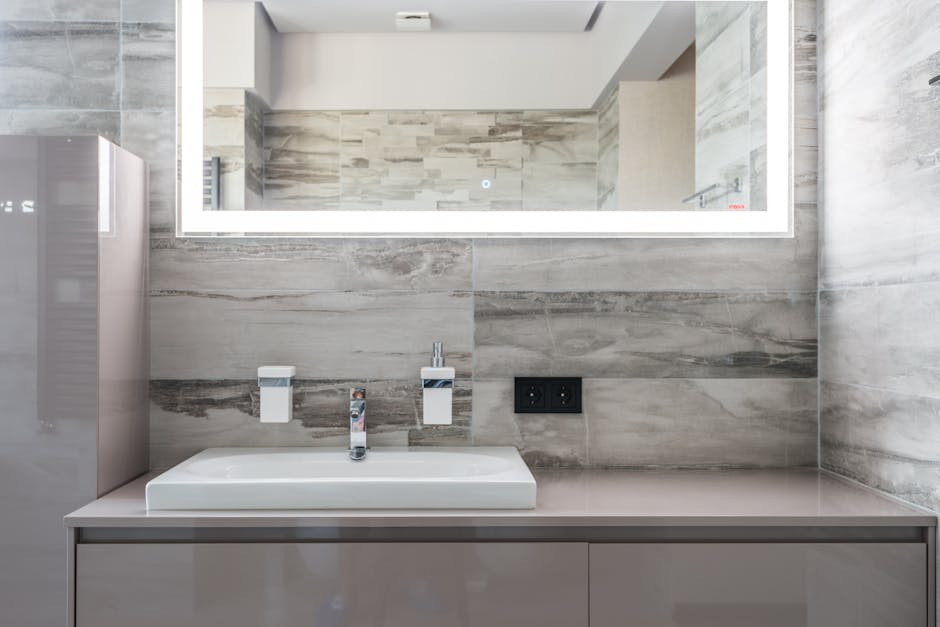
When comparing options, look at the light output, colour appearance, controls and whether the product is suitable for the installation location. Consider whether the mirror lighting can be used independently of the anti-fog function. Tenants may want task lighting without heating the mirror, or vice versa. Clear controls and a straightforward handover note help prevent confusion.
Do not choose solely on appearance. Check that the mirror’s width suits the basin and that its height works for the people using the room. For product options and sizing, LED Mirror World is a product supplier. Its mirror size calculator page can help you think through proportions before ordering. Confirm measurements and product details directly with the supplier, and ask your installer to verify the final position on site.
Measure twice: use a paper template before drilling
A paper template is a simple way to mark the mirror outline on the wall before anyone makes holes. It helps the landlord, tenant and fitter agree on the position and gives you a chance to spot awkward clearances while the mirror is still only a drawing.
- Check the product dimensions. Use the manufacturer’s stated overall width and height, and note where the mounting points, cable entry and controls sit.
- Make a full-size outline. Join sheets of paper or use cardboard to create a template matching the mirror’s actual dimensions.
- Position it over the basin. Use low-tack tape to hold it in place. Check centring, height and sightlines from a comfortable standing position.
- Check clearances. Consider taps, shelves, doors, light fittings, wall cabinets and any nearby shower screen. Make sure the mirror will not obstruct normal use.
- Mark and verify. Mark the proposed outline and mounting points only after confirming the wall construction and the installer’s fixing method.
- Have the electrician or fitter confirm services. Before drilling, check for concealed cables and pipes and confirm the required electrical route and connections.
The template is a positioning aid, not a substitute for checking the wall or following the manufacturer’s mounting instructions. It can, however, prevent a common mistake: ordering a mirror that looks right online but is too wide, too high or awkwardly placed in the actual room.
Don’t overlook ventilation
An anti-fog function treats condensation on the mirror; ventilation deals with moisture in the bathroom. If the room stays damp, towels take a long time to dry, mould returns or condensation appears on windows and walls, check the extractor fan and the room’s air supply. Confirm that the fan operates as intended, that the grille is not clogged and that any run-on setting works. Persistent damp or mould should be investigated rather than concealed by a new mirror.
For landlords, maintenance records can help distinguish a one-off complaint from a recurring issue. Note the reported symptoms, check the fan and other likely causes, and arrange appropriate repairs. Where there is uncertainty about ventilation performance or the source of damp, get competent advice rather than assuming the mirror is the solution.
Plan the job to avoid scope creep
A mirror replacement is easiest to manage when the brief is clear. Agree the mirror size, lighting, anti-fog controls, fixing method, electrical requirements and making-good before work starts. If the existing basin and layout are staying, say so explicitly. This helps keep a modest refresh from expanding into tile removal or plumbing changes simply because the work area is being updated.
- Photograph the existing wall and basin area before the job.
- Confirm product dimensions and delivery timing before booking labour.
- Agree who is responsible for electrical connections and final testing.
- Protect the basin, tiles and nearby surfaces during removal and installation.
- Test the lighting, controls and anti-fog function before signing off.
- Give tenants simple operating instructions and a contact route for faults.
For wider investment planning, landlords may also find market research useful when deciding whether a refresh is appropriate for a particular property. PropertyData publishes property-market resources; see its resource articles for broader context. Sponsored content note: this article includes sponsored content; any supplier or resource mention is provided for reader information and is not a substitute for checking product suitability or obtaining independent advice.
Bottom line
Anti-fog mirrors can work well after a shower, particularly when the heated area is correctly sized and the mirror is switched on in good time. A heated mirror pad is most useful as part of a practical bathroom setup: reliable ventilation, useful mirror lighting, clear controls and a position that suits the people using the space.
For landlords, the best result often comes from a focused, tenant-first refresh rather than a full renovation. Keep the layout if it works, avoid unnecessary plumbing and tile scope, and treat mirror lighting as a high-impact improvement. Measure with a paper template, confirm the installation requirements and test everything before handover. That approach keeps the job manageable while making the shared bathroom routine a little easier every day.